

For personalized products, your description carries triple responsibility: explain the base product, communicate the value of customization, and justify premium pricing. When customers can't touch, try on, or return customized items, your words become their primary confidence builder.
Generic product descriptions don't work for personalization stores. You need to describe not just what the product IS, but what the personalization OPTIONS are and what the RESULT will look like.
Describing the Personalization Options
Most product descriptions focus on the item itself and ignore the customization. This is a missed opportunity.
What to Include
Available personalization types:
"Personalize with custom engraving (up to 15 characters), choice of 5 font styles, and optional birth flower symbol."
What each option means:
"Script font creates elegant, flowing letters—perfect for names. Block font offers bold, easy-to-read text—ideal for dates or initials."
How options affect the product:
"Deeper engraving (premium option) creates more visible text that catches light beautifully. Standard engraving offers subtle elegance."
Before & After Examples
Before (vague):
"Add custom engraving to make it yours."
After (specific):
"Add your message in elegant script or modern block lettering. Names up to 12 characters appear at full size; longer messages are scaled to fit perfectly."
Before (no guidance):
"Choose from multiple font options."
After (helpful):
"Script font: Romantic and flowing, ideal for names and sentiments. Block font: Clean and modern, perfect for dates and initials. Serif font: Classic and timeless, suits formal occasions."
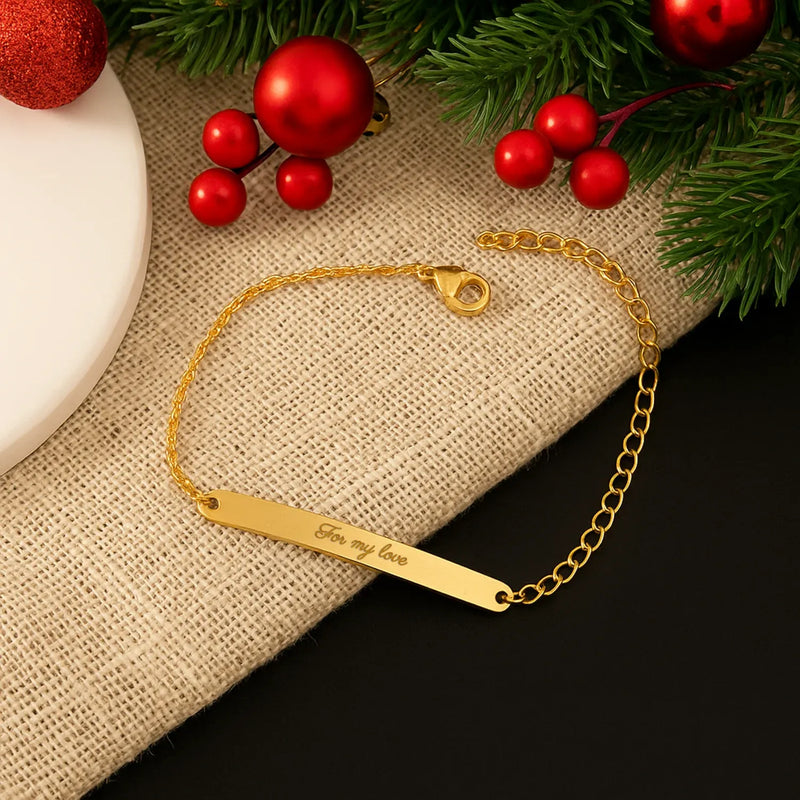
2. Specific personalization options (what's possible)
3. Material details with benefits (why it's quality)
4. Timeline + preview CTA (what happens next)
Describing What Personalization Looks Like
Customers can't see their exact personalization until they use your preview tool. Your description should help them imagine the result.
Paint the Picture
For engraving:
"Your text appears in polished lettering approximately 0.3 inches tall, catching light as you move. The engraving sits centered on the pendant's smooth surface."
For embossing on leather:
"Initials are pressed into the leather, creating a subtle dimensional effect. The impression deepens and becomes more distinctive as the leather ages."
For photo printing:
"Your photo is printed in full color with crisp detail. Faces appear approximately 1.5 inches across—clear enough to recognize, sized to fit the pendant beautifully."
Connect to the Preview Tool
Reference your personalization interface (covered in section 4.3):
"Use our live preview to see exactly how your engraving will appear. Type your message and watch it render on the actual product image in real-time."
This builds confidence and encourages customers to engage with customization.
Material Specificity Builds Trust
Vague material descriptions create doubt. Specific details justify premium pricing.
Before & After Examples
Before:
"Made from premium leather."
After:
"Crafted from full-grain Italian leather, vegetable-tanned using traditional methods. Develops rich patina over years of use—no two pieces age exactly alike."
Before:
"High-quality gold plating."
After:
"18k gold vermeil (2.5 microns thick) over sterling silver base. Tarnish-resistant with proper care; maintains brilliance for years with occasional polishing."
Before:
"Durable stainless steel."
After:
"316L surgical-grade stainless steel—the same material used in high-end watches. Hypoallergenic, waterproof, and scratch-resistant for everyday wear."
The Origin Story (When Relevant)
For luxury items, provenance adds value:
"Leather sourced from a family-owned tannery in Tuscany, operating since 1872. Each hide is hand-selected for consistent grain and minimal imperfections."
Don't fabricate stories—but if your materials have genuine heritage, tell it.
Benefits Over Features
Features describe the product. Benefits explain why customers should care.
The Formula
Feature → So what? → Benefit
- "14k solid gold" → So what? → "Won't tarnish, fade, or irritate skin—looks beautiful for decades"
- "Hand-finished edges" → So what? → "Smooth against your skin, no rough spots to catch on clothing"
- "Adjustable chain" → So what? → "Fits any neckline—wear it high for casual or longer for formal occasions"
Before & After Examples
Before (feature list):
"Sterling silver. Adjustable 16-20 inch chain. Lobster clasp. Gift box included."
After (benefit-focused):
"Sterling silver that stays beautiful with minimal care. Adjustable chain fits every neckline perfectly. Secure clasp you can fasten yourself. Arrives in a gift-ready box—no wrapping needed."
Setting Expectations and Limitations
Honest descriptions prevent disappointment and reduce returns/complaints.
Character Limits in Context
Instead of:
"Maximum 15 characters."
Write:
"Up to 15 characters. Names like 'Emma' or 'Alexander' fit perfectly. Longer names like 'Christopher Michael' work best abbreviated to 'Chris Michael.'"
Font Readability
"Script fonts create beautiful flowing text but may be harder to read at smaller sizes. For rings or small pendants, block fonts often show more clearly."
Color Variations
"Leather color may vary slightly from screen display. Each hide has natural variations that make your piece unique."
Preview Accuracy
"Live preview shows accurate placement and sizing. Final engraving depth and shine may appear slightly different in person—typically more vibrant than on screen."
Setting realistic expectations creates happy customers. Overpromising creates complaints.
Production Time as Value
Reframe production time as a quality signal, not a delay.
Instead of:
"Processing time: 5-7 business days."
Write:
"Handcrafted to order in 5-7 business days. Each piece is made specifically for you—we don't pull from pre-made inventory."
For gift buyers, add urgency:
"Order by December 12th for guaranteed Christmas delivery. Rush production available for last-minute gifts."
Scannable Structure
Even detailed descriptions must be easy to navigate.
What Works
- Short paragraphs: 2-3 sentences maximum, especially on mobile
- Benefit-focused bullets: For quick scanning
- Collapsible sections: "Materials & Care," "Sizing Guide," "Personalization Details"
- Bold key phrases: Draw eyes to important information
Structure Example
[Benefit headline]
[2-3 sentence benefit-focused intro]

[Personalization Options - collapsible]
[Materials & Craftsmanship - collapsible]
[Care Instructions - collapsible]
[Sizing & Fit - collapsible]
This lets quick browsers get the essentials while detail-oriented buyers can expand sections they care about.
Common Mistakes
Ignoring the personalization entirely Describing only the base product and treating customization as an afterthought. The personalization IS the product for many customers.
Vague material descriptions "Premium quality" and "high-grade materials" mean nothing. Specificity builds trust.
Feature lists without benefits Listing "316L stainless steel, water-resistant, adjustable" doesn't explain why customers should care.
Marketing fluff overload "Stunning," "gorgeous," "amazing," and "beautiful" damage credibility. Let specific details create excitement.
Hiding limitations Not mentioning character limits, font readability issues, or color variations leads to disappointed customers.
Forgetting gift buyers Many personalized purchases are gifts. Mention presentation, packaging, and gift messaging options.
Quick Checklist
Personalization Description:
- [ ] All personalization options explained clearly
- [ ] Font/style options described with guidance on when to use each
- [ ] Character limits shown with real examples
- [ ] What the personalization looks like described vividly
- [ ] Preview tool referenced and encouraged
Product Description:
- [ ] Specific materials with grades/origins (not "premium quality")
- [ ] Features connected to benefits (not just listed)
- [ ] Production time framed as handcrafted value
- [ ] Expectations set for variations/limitations
Structure:
- [ ] Short paragraphs (2-3 sentences)
- [ ] Scannable with bullets and bold text
- [ ] Collapsible sections for detailed specs
- [ ] Mobile-friendly formatting
Key Takeaways
Describe the personalization, not just the product. Explain what options are available, what each option means, and what the result will look like.
Specificity builds trust. "Full-grain Italian leather" beats "premium leather" every time.
Connect features to benefits. Don't just list specs—explain why customers should care.
Set honest expectations. Character limits, font readability, and color variations are easier to accept when explained upfront than discovered after delivery.
Reference your preview tool. Encourage customers to see their personalization before buying—it builds confidence and reduces anxiety.
Next up: Social proof and reviews for personalized products.

